Saint Norbert and Church Revitalization
Saint Norbert and Church Reform
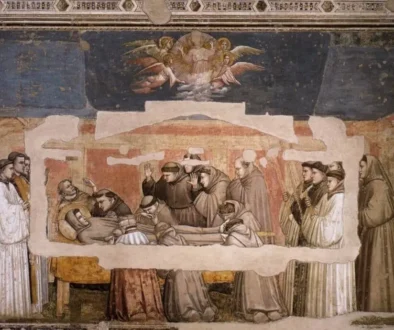
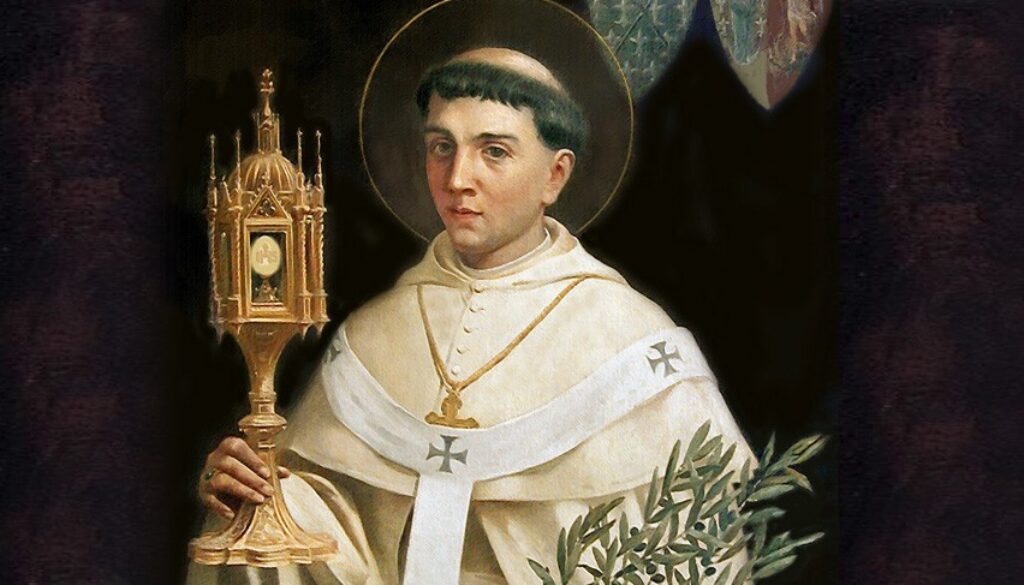
Saint Francis of Assisi, honored in this Holy Year, is rightly celebrated as a trailblazer in Church history. Together with Saint Dominic, he pioneered the life of mendicant friars, who would live by begging and preach everywhere, like Our Lord and His apostles. Less well known is the saintly founder who lived a century earlier, whose order was also established to promote much-needed Church reform and a return to Gospel integrity: Saint Norbert of Xanten.
Who Was Saint Norbert?
Norbert (1080-1134) had an early life similar in many ways to that of Francis: born to wealth and privilege, a youth spent in pursuit of worldly advantage, and a profound interior conversion. The third son of a noble German family, Norbert had great opportunities from an early age. His parents, as was customary then, sent him to board as a student and future member of the canons (clergy in residence) at Xanten’s church. Norbert received a fine education, was ordained a subdeacon, and became a chaplain at the court of Emperor Henry V. The young cleric was known to be charming and gracious, but more concerned with his career and enjoyment of it than with the things of God.
That mindset abruptly changed one afternoon in 1115. As Norbert was out riding, a thunderstorm overtook him; startled by a bolt of lightning, his horse threw him. Norbert lay stunned for a long time. When he got up, he was no longer the same man. He renounced his high position and embarked on a life of penance. He sought guidance from holy men, became a priest, and eventually set out to preach in a rough monastic habit.
Canons Regular
Like Francis, Norbert confused and offended many by his unusual behavior. Clergy accustomed to lives of worldly power and comfort did not take kindly to hearing a newly ordained priest in beggar’s clothes tell them that they were failing to live their calling. He was accused of being an upstart; not only did he belong to no parish or order, but at the time, wandering preachers were unheard of. Canons, like those who had taught Norbert, were confined to a single church, while monks remained in their monasteries.
But God was guiding Norbert’s mission. In 1119, Pope Gelasius II granted him official permission to preach wherever he wished, breaking ground that would later be cultivated by Francis and Dominic. As tends to happen, other men who wished for a purer religious life began to follow Norbert. The bishop of Laon gave him land to build a monastery, at a place called Prémontré. Thus, what would eventually be the new order came to have two names: Premonstratensians, for their first foundation, and Norbertines. The community grew rapidly, not only accumulating many new recruits but developing new branches for nuns and laity.
While Norbert’s monks followed the then-expected model of remaining in their monasteries, Norbert himself continued to travel in his apostolic labors. In time he was made bishop of Magdeburg, and devoted much hard, courageous work to reform in his diocese. Later in life, his labors included defending the rights of the pope and opposing an antipope. Yet, in the midst of such an active life, he never ceased to be a spiritual father to his Order.
Reform and Revitalization
Along with other new orders like the Cistercians and Carthusians, the Norbertines were part of a great movement of reform in the medieval Church. In this time, the Church’s entanglement with worldly power meant, all too often, that the clergy lived like secular officials, the secular officials expected to run the affairs of the Church, and most people were spiritually neglected. In response, new orders like Norbert’s represented a return to a life centered on God through uncompromised living of the evangelical counsels. They formed a strong, beating heart with which to revitalize the Church.
That revitalization was still needed a century later, but the efforts of Norbert and the others were not in vain. God’s work is seldom done all at once. What was begun by earlier reformers would be continued by those who came later, notably Saint Francis.
Today, the spiritual sons and daughters of both great saints can be found worldwide, continuing their work of sustaining God’s Church. Several Norbertine priests serve at the Shrine of Our Lady of Guadalupe in La Crosse. Through their ministry to pilgrims, Saint Norbert’s mission continues, along with the mission of Our Lady: to bring Christ to every heart.
Saint Norbert, pray for us!