The Eucharist: Our Food for the Journey
“The goal of pilgrimages must be the tent of the Eucharistic meeting with Christ. If the Bible is the book of
pilgrims par excellence, the Eucharist is the bread that sustains them on their way.” (The Pilgrimage in the Great Jubilee, Pope John Paul II)
Pope John Paul II and the New Millennium
It was 1998, and the world was preparing for the turn of the millennium. For those who lived through it, we remember the uncertainty: would computers crash? Would everything reset? In hindsight, many of these worries were unfounded. But one thing is certain: with the New Millennium came unprecedented and exponential change to human life. And while the secular world may have been most concerned with the state of our earthly lives, the great saint of this modern era saw with wisdom that it was our spiritual life that we needed to preserve.
Living the Faith in a Changing World
In the years leading up to the New Millennium, Pope Saint John Paul II focused on preparing the Church for living out the faith in a rapidly changing world. His focus on the Great Jubilee (a year of mercy celebrated from Christmas Eve 1999 to Epiphany 2001) sprung from his insight that the Church was one of the last remaining bulwarks of truth amid a world that was losing its center. More, that some aspects of life were becoming unrecognizable, and that the Church must hold fast while at the same time serving the faithful in this new world.
The Pilrgim Church in a New World
Among other concerns, the pope explored the role of pilgrimage—pilgrimage toward our eternal home, toward the New Millennium, and pilgrimage in a new era. As part of this focus, in 1998 Pope John Paul II commissioned the document The Pilgrimage in the Great Jubilee.
The question might arise: “Why pilgrimage?”
One of the Second Vatican Council’s dominant themes was the pilgrim Church of God. In Sacrosanctum Concilium, the Church is described as “present in this world and yet not at home in it.”
In The Pilgrimage in the Great Jubilee‘s section on “Pilgrimage Towards the Third Millennium,” the Second Vatican Council is described as celebrated in the “symbolic frame of a great and choral pilgrimage of the whole ecclesial community.”
From the Conciliar event onwards, the Church lives its pilgrim experience not only in its renewal, in its missionary proclamation, in its commitment for peace, but also through numerous witnesses of the Magisterium of the Church, particularly on the occasion of the jubilee years 1975, 1983 and 2000. The Holy Father Pope John Paul II became a pilgrim in the world. He is the principal evangelizer in these last two decades. Through his apostolic itinerancy and his magisterium, he has guided and solicited the whole Church to prepare itself for the third millennium, which is already close at hand. (The Pilgrimage in the Great Jubilee)
Now, a quarter of a century into the New Millennium, how do the predictions and advice of this document stand?
Pope John Paul II’s Vision for the New Millennium
The section “Pilgrimage Toward the Third Millennium” outlines the vision of pilgrimage for the Church before the year 2000. Among its expectations, it describes the pilgrim Church as a signal for humankind in its search for truth.
Standing for Life
As it has been in the past, the Church has continued to remain steadfast to the truth of the Gospel. Since the year 2000, the Church has faced issues both new and old. Whether it’s an increased push for abortion or attacks on the truth of human sexuality, our world has become increasingly hostile to the faith.
While many in the world refuse to speak up against the evils of abortion, the Church in the Third Millennium has continued to stand up for the unborn. The Church at the turn of the century could only pray and work for the legal protection of the unborn—and with the overturning of Roe v. Wade, the Church did prove to be a signal of truth for the world.
Attacks on Human Sexuality
Already at the turn of the millennium, the truth of human sexuality was under attack. But in the past decade, there have been new pushes to break down the sacrament of marriage and sexual identity. With Obergefell v. Hodges in 2015, same-sex marriage was legalized. At the time, the Catholic Church was one of the only voices speaking out in defense of the truth that marriage is between one man and one woman.
More, in recent years there has been an unprecedented attack on the truth of man and woman made in the image and likeness of God, with a push for transgenderism and a denial of the existence of manhood and womanhood. The Church has stood as a bulwark against this attack, despite our culture embracing these lies of the evil one. In this area, the pilgrim Church must be ever mindful that we are strangers in a strange land.
The Word of God and the Eucharist
But if there were one hallmark of the pilgrim Church of the Third Millennium, it might be best seen in the brief statement that “Viaticum and treasure in this itinerary are the Word of God and the Eucharist.”
It is possible that in this entire document, these words ring truest to our ears a quarter of a century in.
The Church has seen a dramatic return to the study of the Word of God, and has been marked especially by an increased devotion to the Eucharist.
While the Church has always defended the truth of Jesus in the Eucharist, the Church in the last quarter century has wisely sought to build a deeper devotion to Our Lord in the Blessed Sacrament and place a greater emphasis on the Eucharist. Beginning with John Paul II himself and culminating most recently in the three-year Eucharistic Revival and summer Eucharistic Congress, the Holy Spirit has guided the Church to rely on the True Presence of Christ in her midst.
Thanks to the Holy Spirit’s guidance, pilgrimage in the Third Millennium will certainly be Eucharistic—the Word of God made flesh and living among us guides us unfailingly toward our eternal home and allows the Church to ever be a signal of truth.
The Eucharist is Food for the Journey
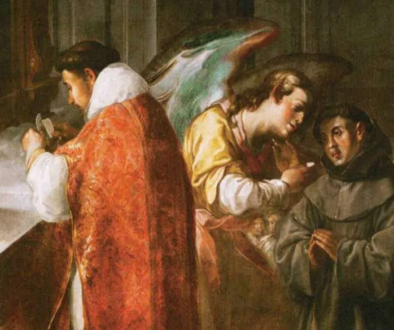
It is this Eucharistic focus that will answer The Pilgrimage in the Great Jubilee’s exhortation that “the goal of pilgrimages must be the tent of the Eucharistic meeting with Christ. If the Bible is the book of pilgrims par excellence, the Eucharist is the bread that sustains them on their way.”
It is these two pillars—Scripture and Eucharist—that will be food for the journey of this millennium.
There is nowhere more fitting or more powerful than Holy Mass in which to receive this food. When we piously attend Mass to receive Jesus in the Eucharist and hear His words in the Scriptures, we are partaking in the food that will aid us in our journey home.
Plan a Eucharistic Pilgrimage
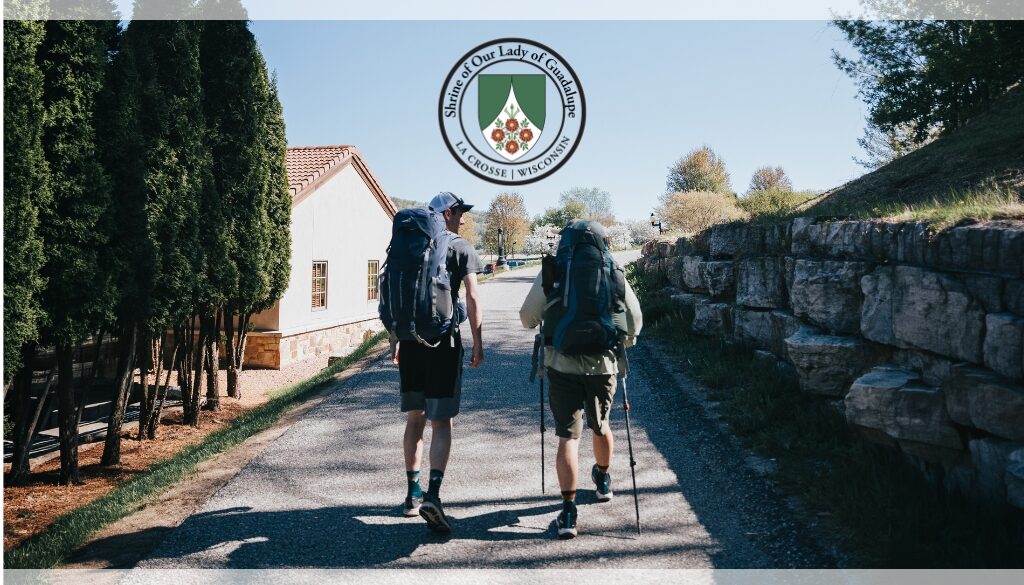
This year, plan to attend Mass at a holy place, one which is particularly set apart for pilgrims to partake in the graces of the Mass. Make a pilgrimage to the Shrine of Our Lady of Guadalupe and attend Mass and receive the Sacrament of Reconciliation. Open yourself to the extraordinary graces available on a holy pilgrimage. Plan your pilgrimage today.