The Missionary Spirit of Saint Junípero Serra
The Young Saint Junípero Serra
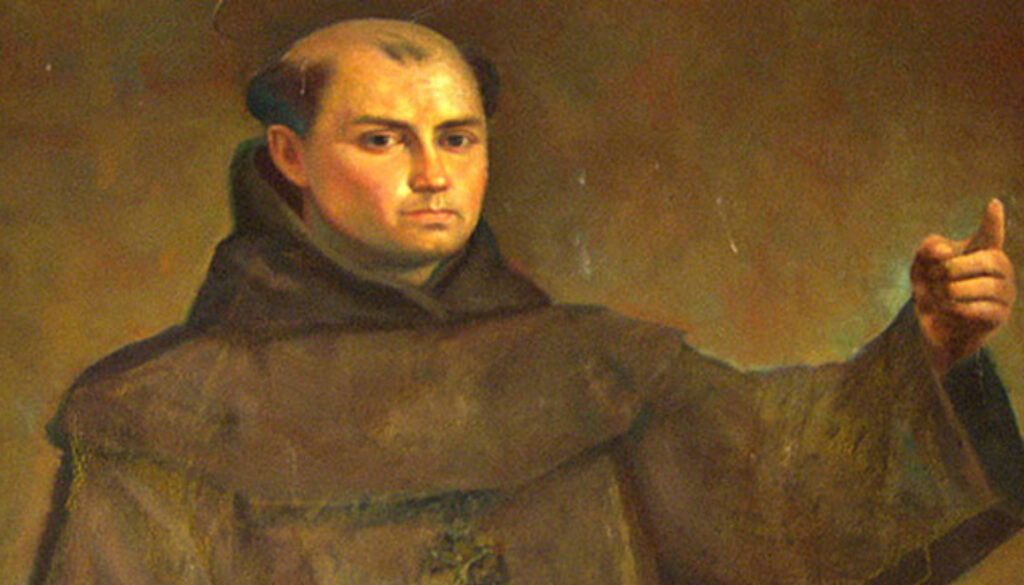
From the beginning, Saint Francis and his brothers were a preaching order, a missionary order, dedicated to proclaiming the Word of God to near and far. Some Franciscans have made great journeys and sacrifices to carry the Gospel to those who have not heard. One such son of Saint Francis was Saint Junípero Serra (1713–1784), who left his native Spain to evangelize in Mexico and California.
Born on the Spanish island of Mallorca, where he was baptized Miguel, the future saint was only fifteen when he joined the Franciscan Order, and became a priest in his mid-twenties. He took the name Junípero after Brother Juniper, one of Saint Francis’s first companions. Junípero probably did not seem a likely candidate for the rugged missions of the New World: Small, slight, and scholarly, he taught philosophy for six years, completed a doctorate in theology, and was appointed a university professor in that field.
A Missionary Spirit
But at thirty-six years old, the accomplished scholar took on an entirely new life and volunteered for missionary work, a call he had wanted to answer long ago. Junípero arrived in Veracruz, Mexico, in 1749, and continued on foot to Mexico City—a distance that today takes over five hours to drive. This practice of strict Franciscan poverty led to an infection in his leg that would cause him pain for the rest of his life.
Mexico was not new mission territory; Our Lady of Guadalupe had appeared there two hundred years earlier, while Junípero’s fellow Franciscan, Juan de Zumárraga, was acting bishop of Mexico City. By the mid-eighteenth century, missionaries were sent not so much to convert pagans as to serve Catholics living in far-flung mission settlements. In these missions, Native Americans who accepted baptism received instruction, lived a Christian life in community, and learned farming and various trades. Junípero spent twenty years there, becoming president of the Mexican missions.
Move to California
In 1769, for political reasons, Spain called for a new expedition to California; Junípero was asked to go along. His government’s worldly ambition gave the missionary abundant new spiritual opportunities. Traveling through areas where the native people had never heard the Gospel before, Junípero and his fellow friars established one new mission after another, a chain stretching the length of California. These missions eventually grew into major cities whose names are familiar today, e.g. Los Angeles, San Francisco, Sacramento.
Like his father Saint Francis, Junípero also devoted much energy to caring for the poor and disadvantaged. In his life this work took the form of defending the native peoples’ rights against the powerful conquistadors. The Spanish, like most Europeans, tended to regard the peoples of the New World as less than fully human, and often exploited, abused, or outright murdered them.
Care for His Flock
All of his missionary career, Junípero fought for the protection of his flock. A father to his people, he was not afraid to speak truth to men in high places. On one occasion, he traveled all the way from San Diego to Mexico City to bring his concerns to the viceroy, with success; new laws were passed to ensure greater justice for the native people.
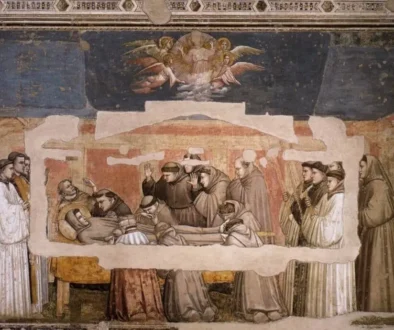
Junípero continued his labors until close to his death at seventy-one. Another friar, Francisco Palóu, who wrote Junípero’s first biography, recounted that at the burial the weeping of the native converts drowned out the chanting of the prayers.
Canonization
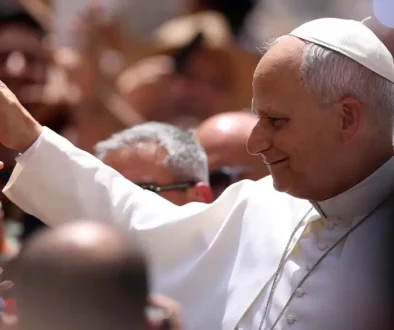
Pope Francis canonized Junípero in 2015, describing him as a model of Christian charity in action: “He was the embodiment of ‘a Church which goes forth,’ a Church which sets out to bring everywhere the reconciling tenderness of God. … He learned how to bring to birth and nurture God’s life in the faces of everyone he met; he made them his brothers and sisters.” The Holy Father spoke of Junípero’s motto, siempre adelante—ever forward—as a force that shaped the saint’s life of intense self-giving, and can do the same for each of us.
Saint Junípero Serra, pray for us!